

Share to
Tee
Still deciding? Get samples first, Contact US !
View similar products
Tag list
- Description
-
Molding process
Hot pressing process, cold extrusion process, molding process, etc., through the proportion of different types of mold, mandrel, intermediate frequency coil to complete the product molding production.
Production range:DN10-DN3400
Main material
Carbon steel, alloy steel, stainless steel, low temperature steel, nickel base alloy and other materials.
Application condition
Petrochemical, natural gas, Marine platform, heat pipeline, fire, water supply and drainage, electricity, etc
Product characteristics
Advanced production equipment and testing equipment ensure that the products are in line with industry standards and international standards, and can be customized according to customer needs.
Product introduction
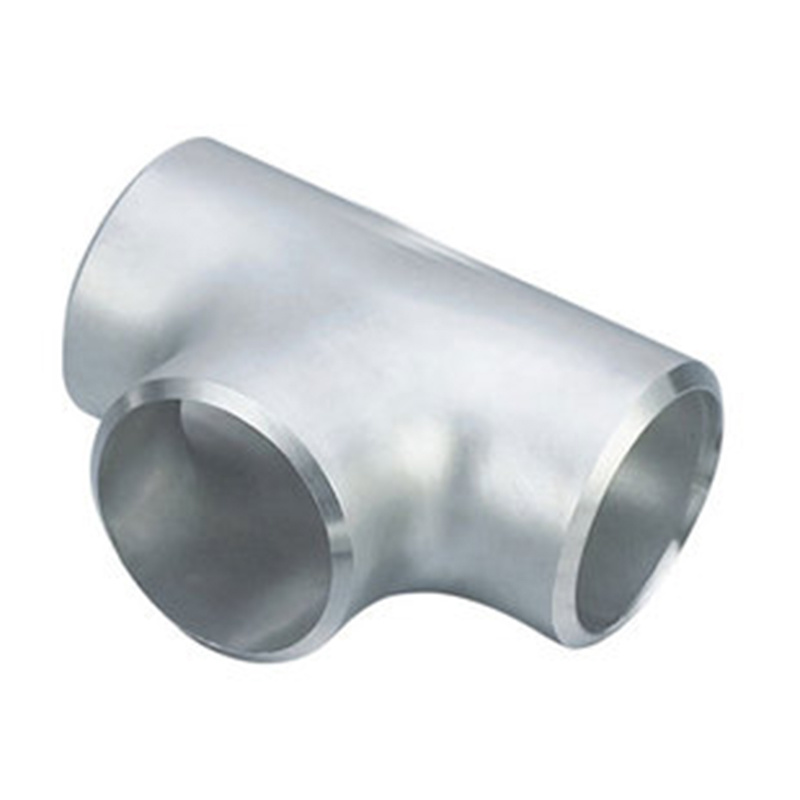
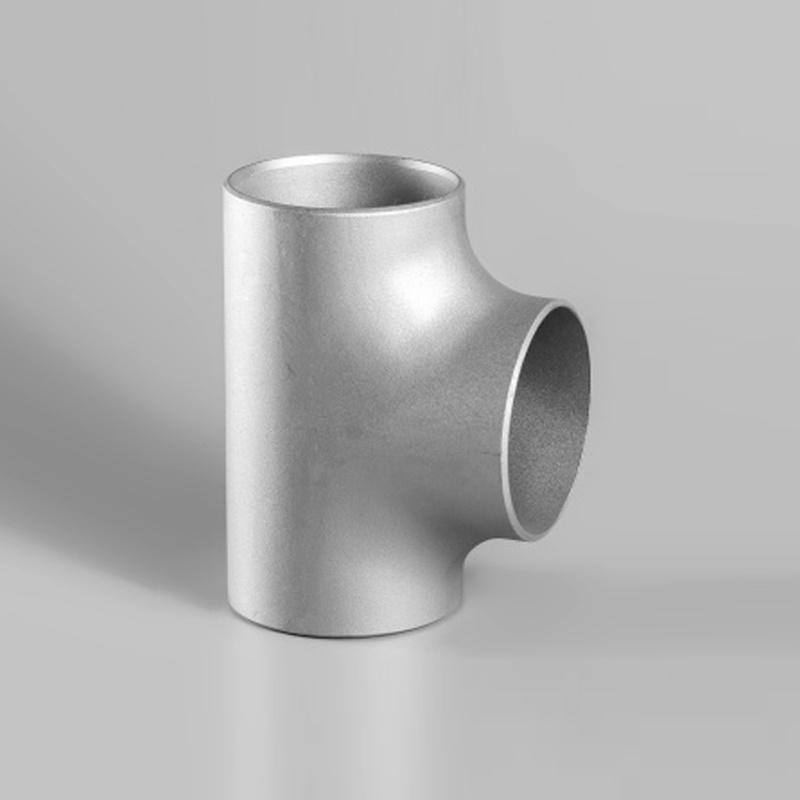
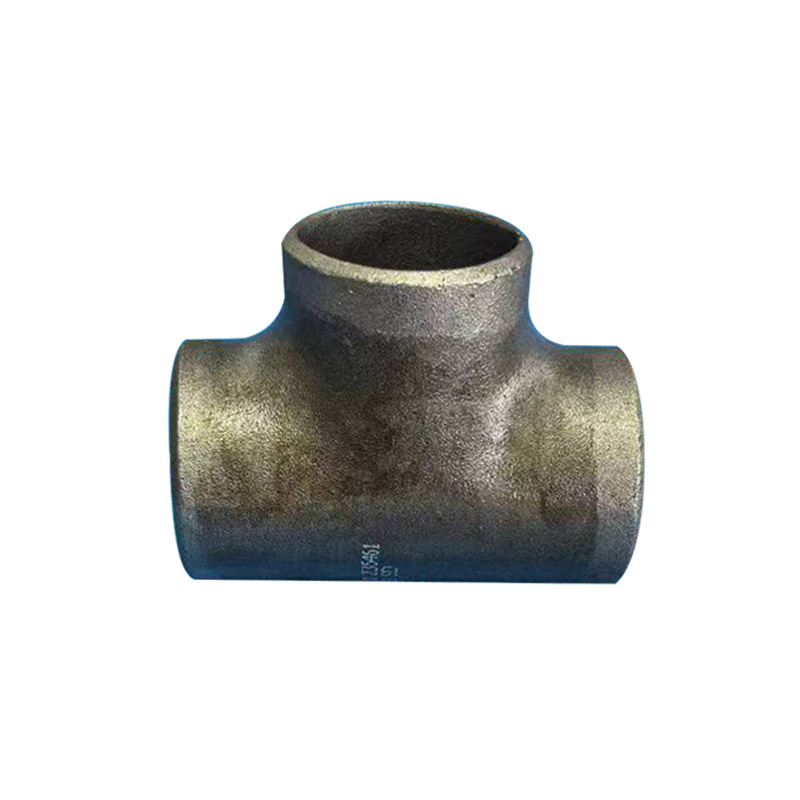
Stainless steel tee for pipe fittings, pipe connectors. Used in the main pipe to branch pipe. The stainless steel tee has equal diameter and reducing diameter, and the nozzle end of the equal diameter tee is the same size; The main pipe size of the reducing tee is the same, and the nozzle size of the branch pipe is smaller than that of the main pipe.
Stainless steel tee is a pipe fitting for pipe branches. For the use of seamless pipe manufacturing tee, the process is usually used hydraulic expansion and hot forming two kinds. Hydraulic expansion of stainless steel tee is a forming process in which branch pipe is expanded by axial compensation of metal material. The process is to use a special hydraulic press to inject liquid into the tube blank with the same diameter as the tee. Through the two horizontal side cylinders of the hydraulic press, the tube blank is extruded synchronously. The volume of the tube blank becomes smaller after being extruded, and the liquid in the tube blank increases with the volume of the tube blank. The metal material flows along the inner cavity of the die under the double action of the liquid pressure in the side cylinder and the tube blank and expands the branch pipe.
The hydraulic expansion process of stainless steel tee can be formed at one time, and the production efficiency is high. The wall thickness of the head and shoulder of the stainless steel tee has increased.
Due to the large tonnage of equipment required for the hydraulic expansion process of stainless steel tee, it is mainly used for the manufacture of stainless steel tee with standard wall thickness less than DN400 in China. Its suitable forming materials are low carbon steel, low alloy steel, stainless steel, including some non-ferrous metal materials, such as copper, aluminum, titanium and so on.
According to manufacturing standards can be divided into national standard, electrical standard, water standard, American standard, German standard, Japanese standard, Russian standard, etc. Specific as follows: GB/T12459, GB/T13401, ASME B16.9, SH3408, SH3409, HG/T21635, DL/T 695, SY/T 0510, DIN 2615.
A pipe tee is a fundamental component in modern piping systems, serving as a connector that allows the division or merging of fluid or gas flow. Its distinctive “T” shape makes it an ideal solution for creating branches in pipelines or redirecting the flow in complex networks. Unlike simple straight connectors, a pipe tee provides flexibility in both industrial and residential applications, enabling engineers and plumbers to design efficient, organized, and functional piping layouts.
Structural Design of Pipe Tees
Pipe tees consist of three openings, two aligned on the main run and one perpendicular branch. The design is deceptively simple, but it is engineered to handle a range of pressures, temperatures, and flow rates. The perpendicular branch can either match the diameter of the main line or be smaller, depending on system requirements. This variation in design gives rise to different types of pipe tees:
-
Concentric Tee
In a concentric tee, the branch outlet is centered on the main pipe, forming a symmetrical “T.” This design is commonly used in systems where equal flow distribution is essential. Concentric tees are particularly suitable for applications such as water treatment plants, irrigation systems, and general plumbing networks. -
Offset or Reducing Tee
Reducing tees feature a branch diameter smaller than the main pipeline. These fittings are crucial when connecting pipelines of different sizes. The reduction allows for smooth transitions in pressure and flow velocity, minimizing turbulence and ensuring system stability. Reducing tees are widely used in industrial chemical processing, fuel distribution systems, and HVAC installations. -
Side Outlet Tee
Some pipe tees are manufactured with an angled or side outlet, often at 45 or 30 degrees, to improve flow efficiency. This design reduces energy loss and helps prevent issues caused by abrupt changes in direction, making it ideal for high-speed fluid transportation systems.
Materials and Construction
The material of a pipe tee determines its durability, corrosion resistance, and suitability for various applications. Common materials include:
-
Carbon Steel – Offers high strength and pressure tolerance. Frequently used in oil pipelines, gas distribution, and steam systems.
-
Stainless Steel – Provides excellent resistance to corrosion and high temperatures, ideal for chemical processing, food-grade piping, and pharmaceutical lines.
-
Brass – Offers corrosion resistance and ease of machining, commonly applied in plumbing and potable water systems.
-
PVC and CPVC – Lightweight, chemically resistant, and suitable for water distribution, irrigation, and low-pressure chemical pipelines.
-
Ductile Iron – Strong and durable, often used in municipal water supply, sewage, and drainage systems.
Manufacturers often employ different construction techniques such as welding, forging, or molding, depending on the material and pressure requirements. Welded steel tees are preferred for high-pressure and high-temperature systems, while molded PVC tees are more common in residential plumbing.
Key Standards and Compliance
Ensuring that pipe tees meet international and industry standards is critical for safe and efficient operation. Standards include:
-
ASME B16.9 – Covers factory-made wrought steel buttwelding fittings, including tees.
-
ASTM A403 / A234 – Defines material, mechanical properties, and manufacturing practices for steel pipe fittings.
-
DIN 2615 – German standard specifying dimensions and tolerances for steel tees.
-
ISO 9001 – Quality management certification ensuring consistency and reliability in manufacturing.
Compliance with these standards guarantees that pipe tees can safely handle the pressures, temperatures, and chemical exposures they will encounter in service.
Applications of Pipe Tees
Pipe tees are extremely versatile, serving a wide array of industries and applications:
-
Oil, Gas, and Petrochemical Industry
In refineries and pipelines, pipe tees are used to branch off or combine flow lines, ensuring efficient transport of crude oil, natural gas, or refined products. Reducing tees help connect main lines with smaller distribution lines, maintaining system stability. -
Municipal Water Systems
Tees are used to distribute water from main supply lines to residential or industrial branches, including fire hydrant connections and service lines. Equal tees ensure balanced flow to multiple destinations. -
HVAC and Mechanical Systems
In heating, ventilation, and cooling systems, tees allow for even distribution of water or refrigerants, helping maintain temperature control across multiple zones. -
Industrial Processing
Chemical plants, refineries, and food processing facilities use pipe tees to connect reactors, storage tanks, and pumps, ensuring controlled and efficient flow in complex piping networks. Stainless steel tees are often chosen to prevent corrosion from chemical exposure. -
Marine and Shipbuilding
Tees are utilized in fuel lines, ballast systems, and water circulation systems onboard ships, where corrosion resistance and structural strength are critical.
Advantages of Pipe Tees
-
Flow Versatility: Enables fluid to split or combine without complex assemblies.
-
Customizable: Available in equal, reducing, and angled designs for specific system needs.
-
Durable Materials: Can be selected based on pressure, chemical exposure, and temperature.
-
Standardized Quality: Manufactured according to international codes and specifications.
Installation Guidelines
Proper installation of pipe tees ensures long-term reliability and system efficiency:
-
Align tees precisely with connecting pipes to avoid leaks and stress.
-
Use appropriate joining techniques, including welding, threading, or flanging, depending on material and system pressure.
-
Ensure sealing elements like gaskets or Teflon tape are applied where needed to prevent leakage.
-
Regular inspection is necessary, especially for high-pressure systems, including non-destructive testing for signs of fatigue, cracks, or corrosion.
Future Trends in Pipe Tee Design
The demand for lighter, more corrosion-resistant, and efficient piping components is driving innovation in pipe tee manufacturing. Advances include:
-
Composite materials combining polymers and metals for strength and chemical resistance.
-
3D-printed tees for custom applications and rapid prototyping in specialized systems.
-
Enhanced surface coatings to reduce fouling, scaling, and corrosion in aggressive chemical environments.
These innovations ensure that pipe tees remain relevant and adaptable in modern infrastructure, industrial processes, and sustainable water management systems.
Conclusion
Pipe tees are much more than simple connectors; they are critical elements in the safe and efficient operation of piping systems. From residential plumbing to high-pressure industrial pipelines, pipe tees provide flexibility, durability, and efficiency. By selecting the right type, material, and design, engineers can optimize flow distribution, minimize maintenance issues, and ensure reliable performance in a variety of applications.
Whether used to split water to multiple branches, connect pipelines of different sizes, or support industrial processes, pipe tees continue to play a vital role in modern piping networks worldwide. Their adaptability, reliability, and compliance with global standards make them an essential component in both everyday plumbing and advanced engineering systems.
-
Tee
Still deciding? Get samples first, Contact US !
Products Category
Tag list
Inquire Now
Note: Please leave your email address, our professionals will contact you as soon as possible!

Add: 200 meters north of the intersection of Yanta Road, Yanshan , Cangzhou, Hebei Province, China 061300


Contact Information
Contact: General Manager Leo
WeChat/Tel: +86-13333368204
WhatsApp: +86-13333368204
E-mail: sales@mxlpipeline.com

Request Quote
* Note: Leave your contact information to get a free product quote