

Share to
Tee
Still deciding? Get samples first, Contact US !
View similar products
Tag list
- Description
-
Molding process
Hot pressing process, cold extrusion process, molding process, etc., through the proportion of different types of mold, mandrel, intermediate frequency coil to complete the product molding production.
Production range:DN10-DN3400
Main material
Carbon steel, alloy steel, stainless steel, low temperature steel, nickel base alloy and other materials.
Application condition
Petrochemical, natural gas, Marine platform, heat pipeline, fire, water supply and drainage, electricity, etc
Product characteristics
Advanced production equipment and testing equipment ensure that the products are in line with industry standards and international standards, and can be customized according to customer needs.
Product introduction
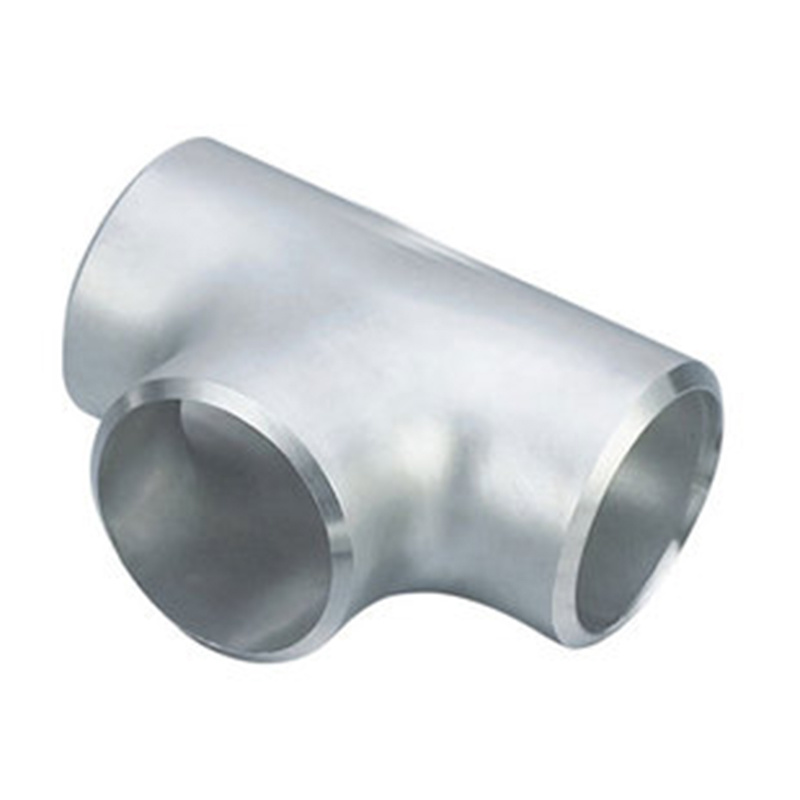
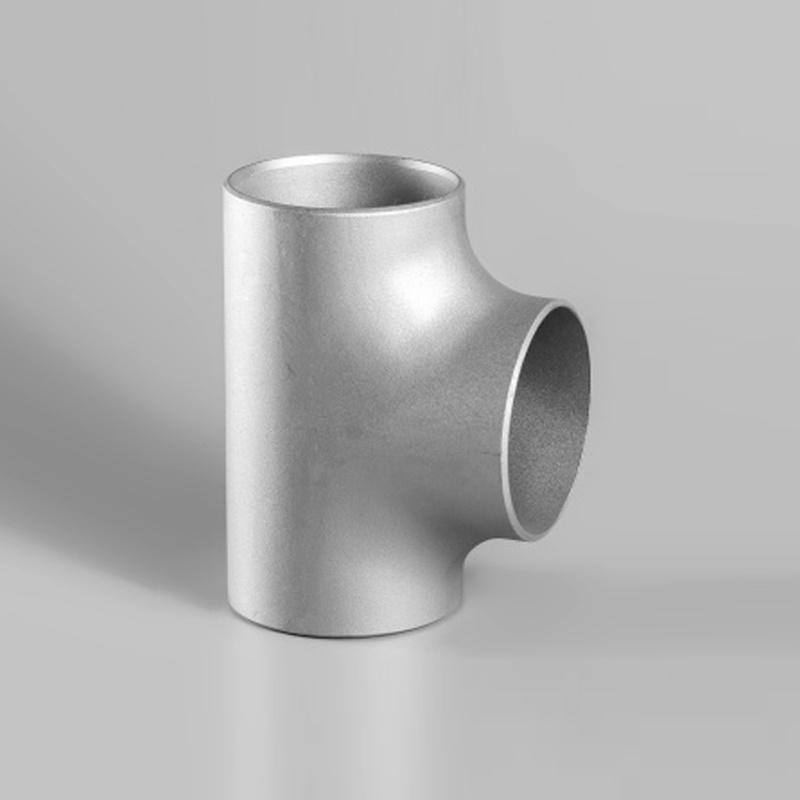
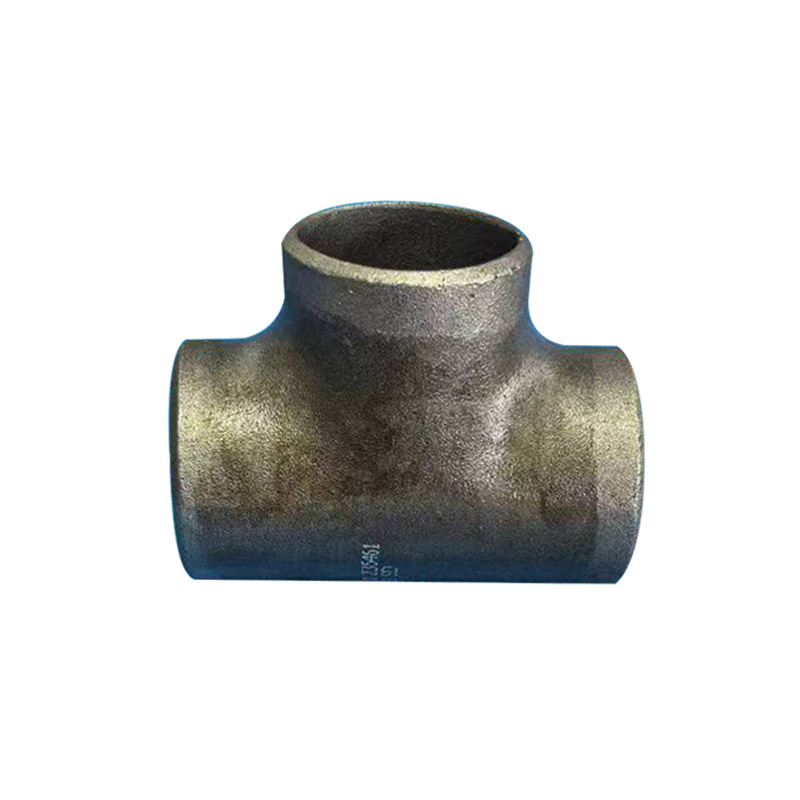
Stainless steel tee for pipe fittings, pipe connectors. Used in the main pipe to branch pipe. The stainless steel tee has equal diameter and reducing diameter, and the nozzle end of the equal diameter tee is the same size; The main pipe size of the reducing tee is the same, and the nozzle size of the branch pipe is smaller than that of the main pipe.
Stainless steel tee is a pipe fitting for pipe branches. For the use of seamless pipe manufacturing tee, the process is usually used hydraulic expansion and hot forming two kinds. Hydraulic expansion of stainless steel tee is a forming process in which branch pipe is expanded by axial compensation of metal material. The process is to use a special hydraulic press to inject liquid into the tube blank with the same diameter as the tee. Through the two horizontal side cylinders of the hydraulic press, the tube blank is extruded synchronously. The volume of the tube blank becomes smaller after being extruded, and the liquid in the tube blank increases with the volume of the tube blank. The metal material flows along the inner cavity of the die under the double action of the liquid pressure in the side cylinder and the tube blank and expands the branch pipe.
The hydraulic expansion process of stainless steel tee can be formed at one time, and the production efficiency is high. The wall thickness of the head and shoulder of the stainless steel tee has increased.
Due to the large tonnage of equipment required for the hydraulic expansion process of stainless steel tee, it is mainly used for the manufacture of stainless steel tee with standard wall thickness less than DN400 in China. Its suitable forming materials are low carbon steel, low alloy steel, stainless steel, including some non-ferrous metal materials, such as copper, aluminum, titanium and so on.
According to manufacturing standards can be divided into national standard, electrical standard, water standard, American standard, German standard, Japanese standard, Russian standard, etc. Specific as follows: GB/T12459, GB/T13401, ASME B16.9, SH3408, SH3409, HG/T21635, DL/T 695, SY/T 0510, DIN 2615.
A pipe tee is one of the most widely used pipe fittings in plumbing, industrial piping, and mechanical systems. Its primary function is to connect three sections of pipe, allowing fluid or gas to flow in multiple directions. The fitting is shaped like the letter “T,” with one inlet and two outlets or vice versa, which makes it highly versatile for branching or combining flow. Pipe tees are crucial in applications where direction changes or fluid distribution is needed, making them an indispensable element in piping systems across various industries.
Types of Pipe Tees
Pipe tees come in several types depending on the application, pressure requirements, and design specifications:
-
Equal Tee (Straight Tee)
An equal tee has three outlets of the same diameter, making it ideal for situations where the flow needs to be split evenly into two directions. Equal tees are commonly used in water supply lines, HVAC systems, and chemical plants where symmetrical flow distribution is necessary. -
Reducing Tee
A reducing tee has a branch that is smaller than the main run, allowing the system to connect pipes of different diameters. This is particularly useful when a main pipeline needs to supply fluid to smaller distribution lines. Reducing tees are widely applied in oil and gas pipelines, industrial process systems, and municipal water supply networks. -
Lateral Tee
Lateral tees are designed to split flow at a 45-degree angle rather than the traditional 90-degree angle. This design minimizes turbulence and pressure drop, making it suitable for high-velocity pipelines and systems requiring smoother flow transitions. -
Barred Tee / Threaded Tee
Some pipe tees are equipped with threaded connections rather than welded or flanged ends. Threaded tees are easier to install and remove, making them suitable for low-pressure applications, temporary piping systems, or maintenance-intensive setups.
Materials Used for Pipe Tees
The choice of material for a pipe tee depends on the medium, temperature, pressure, and environmental conditions. Common materials include:
-
Stainless Steel – Resistant to corrosion, high temperatures, and chemical attack. Stainless steel tees are often used in chemical processing, food and beverage industries, and pharmaceutical pipelines.
-
Carbon Steel – Offers strength and durability at a lower cost, commonly used in high-pressure systems such as oil, gas, and steam pipelines.
-
Copper – Excellent for plumbing applications, especially hot and cold water supply, due to its thermal conductivity and corrosion resistance.
-
PVC (Polyvinyl Chloride) – Lightweight and corrosion-resistant, suitable for low-pressure water supply, drainage, and irrigation systems.
-
CPVC (Chlorinated PVC) – Able to withstand higher temperatures than standard PVC, often used in hot water distribution systems.
-
Ductile Iron – Strong and durable, typically used for municipal water and sewage systems.
Standards and Specifications
Pipe tees are manufactured in accordance with various international standards to ensure safety, reliability, and compatibility. Common standards include:
-
ASME B16.9 – Covers factory-made wrought steel buttwelding fittings, including tees, elbows, and reducers.
-
ASTM A234 / A403 – Defines material and manufacturing requirements for steel pipe fittings.
-
DIN 2615 – German standard covering dimensions and tolerances for steel pipe tees.
-
ISO 9001 – Certification for quality management systems, ensuring that pipe tees meet high-quality production standards.
Applications of Pipe Tees
Pipe tees are used in virtually every sector where fluid transport is required. Key applications include:
-
Oil and Gas Industry
In oil refineries and gas distribution networks, pipe tees allow for the branching of pipelines that transport crude oil, natural gas, or refined products. Reducing tees are particularly useful when connecting pipelines of varying diameters. -
Water Supply Systems
Both municipal and industrial water systems rely on tees to distribute water to multiple branches efficiently. Equal tees are commonly installed in potable water systems, while reducing tees are used for connecting main lines to smaller service lines. -
Chemical Processing Plants
Chemical plants use pipe tees to connect reactors, heat exchangers, and storage tanks. Stainless steel tees are preferred to prevent corrosion caused by aggressive chemicals. -
HVAC Systems
Heating, ventilation, and air conditioning systems use tees to split or combine flow in ductwork and piping. They are essential for distributing chilled water, hot water, or refrigerants across multiple zones. -
Power Generation
In power plants, pipe tees help in steam distribution, cooling water lines, and fuel supply systems. Their ability to handle high temperatures and pressures makes them essential components in energy infrastructure. -
Food and Beverage Industry
Stainless steel tees are commonly used in hygienic piping systems to transport milk, juices, beer, or other liquids while maintaining sanitary conditions.
Installation and Maintenance
Proper installation of a pipe tee is essential for system efficiency and longevity. Installation considerations include:
-
Ensuring proper alignment with the connected pipes to prevent leaks and undue stress.
-
Using appropriate joining methods: welding, threading, or flanging, depending on the pipe material and pressure rating.
-
Applying gaskets, sealants, or Teflon tape for threaded connections to prevent leakage.
-
Following recommended torque specifications for bolted connections to avoid damage or deformation.
Maintenance involves periodic inspection for corrosion, cracks, or pressure drops. In high-pressure or chemically aggressive environments, non-destructive testing (NDT) such as ultrasonic testing or radiography may be performed to ensure integrity.
Advantages of Using Pipe Tees
-
Versatility: Can connect three pipes of equal or different diameters.
-
Flow Distribution: Efficiently splits or combines fluid flow.
-
Wide Material Selection: Suitable for corrosive, high-temperature, or high-pressure applications.
-
Industry Compliance: Manufactured according to international standards for safety and performance.
Conclusion
A pipe tee is more than just a simple connector; it is a critical component in the design and operation of piping systems. Its ability to manage flow directions, handle high pressures, and resist environmental challenges makes it indispensable in industries ranging from oil and gas to food and beverage. Whether using an equal tee for balanced distribution or a reducing tee for diameter transitions, these fittings ensure that pipelines operate safely and efficiently.
Choosing the right material, size, and type of pipe tee can significantly affect the performance and longevity of a piping system, making careful selection and proper installation paramount.
In modern industrial and domestic applications, the pipe tee continues to be a reliable and versatile solution, demonstrating the importance of this simple yet crucial component in the global infrastructure of fluid and gas transport.
In modern industrial and civil engineering systems, pipeline networks form the backbone of fluid and gas transportation. Within these networks, the pipe tee is one of the most fundamental and indispensable fittings. Designed to create a branch connection from a straight pipeline, the pipe tee enables controlled distribution, redirection, or combination of flow. Although structurally simple, the pipe tee has a profound impact on system efficiency, safety, scalability, and long-term performance.
A pipe tee is characterized by its three openings, arranged in a T-shaped configuration. This structure allows fluid or gas to either split into two directions or merge from multiple sources into a single pipeline. Pipe tees are used extensively in water supply systems, HVAC networks, oil and gas pipelines, chemical processing plants, fire protection systems, power generation facilities, and building infrastructure. Their versatility makes them a core component across both industrial-scale projects and everyday utility applications.
From an engineering standpoint, the pipe tee is not merely a connector but a functional control point within the pipeline system. By introducing a branch, engineers can design complex flow paths, integrate auxiliary equipment, or expand existing networks without disrupting the main pipeline. This flexibility is particularly valuable in large-scale installations where future expansion, maintenance access, and system modification must be considered during the initial design phase.
Pipe tees are available in multiple structural configurations to suit different operational requirements. The most common types include equal pipe tees and reducing pipe tees. An equal pipe tee features three outlets of the same diameter, ensuring balanced flow distribution. A reducing pipe tee, on the other hand, has one outlet with a smaller diameter, allowing engineers to adjust flow rates, connect auxiliary lines, or integrate equipment with different pipe sizes. This adaptability enables precise system control while maintaining hydraulic stability.
Material selection is a critical factor in pipe tee performance. Depending on the application, pipe tees may be manufactured from carbon steel, stainless steel, alloy steel, ductile iron, brass, copper, PVC, CPVC, HDPE, or other engineered plastics. Each material offers specific advantages in terms of pressure tolerance, corrosion resistance, temperature range, mechanical strength, and cost efficiency. For example, metal pipe tees are widely used in high-pressure or high-temperature systems, while plastic pipe tees are favored for lightweight, corrosion-resistant, and cost-sensitive installations.
Manufacturing processes play a decisive role in determining the quality and reliability of a pipe tee. Common production methods include forging, casting, extrusion, machining, and injection molding. Forged pipe tees are valued for their superior strength and uniform internal structure, making them suitable for demanding industrial applications. Cast pipe tees offer flexibility in complex shapes and large sizes, while molded plastic tees provide excellent consistency and mass production efficiency. Advances in manufacturing technology continue to improve dimensional accuracy, surface finish, and overall performance.
Connection methods further influence the functionality of pipe tees within a system. Pipe tees may be joined using welding, threading, flanging, socket fusion, butt fusion, solvent cementing, or compression fittings. Welded pipe tees provide strong, leak-resistant connections for permanent installations. Threaded tees allow easier disassembly and maintenance. Fusion-based connections are commonly used in plastic piping systems, offering seamless joints and excellent chemical resistance. Selecting the appropriate connection method is essential for ensuring system integrity and operational safety.
Flow dynamics are another important consideration when designing with pipe tees. The introduction of a branch inevitably affects pressure distribution and flow velocity. Poorly designed pipe tee placement can lead to turbulence, pressure loss, vibration, or uneven flow distribution. To address these challenges, engineers carefully calculate flow rates, select appropriate pipe diameters, and optimize tee orientation. In critical systems, computational fluid dynamics (CFD) analysis may be used to simulate flow behavior and improve overall efficiency.
Pipe tees also play a vital role in system maintenance and operational flexibility. By creating branch connections, pipe tees allow isolation valves, sensors, pressure gauges, and auxiliary equipment to be integrated into the pipeline. This design approach simplifies inspection, monitoring, and repair tasks while minimizing system downtime. In industrial environments where continuous operation is essential, such flexibility contributes directly to productivity and cost control.
In building services and municipal infrastructure, pipe tees are essential for distributing water, heating, cooling, and gas to multiple zones. Residential plumbing systems rely on pipe tees to deliver water to bathrooms, kitchens, and appliances. Commercial buildings use pipe tees extensively in fire sprinkler systems, chilled water loops, and air handling networks. In these applications, reliability, compliance with standards, and ease of installation are critical factors driving pipe tee selection.
Standardization has significantly influenced the global pipe tee market. International standards such as ASME, ASTM, ISO, DIN, EN, and JIS define dimensional tolerances, pressure ratings, material specifications, and testing requirements. Compliance with these standards ensures interchangeability, safety, and consistent performance across different manufacturers and regions. For project developers and contractors, standardized pipe tees simplify procurement and reduce installation risks.
With the rapid development of industrial automation and smart infrastructure, pipe tees are increasingly integrated into digitally monitored pipeline systems. Sensors and control devices installed at tee junctions provide real-time data on flow rate, pressure, and temperature. This information supports predictive maintenance, energy optimization, and system diagnostics. As digitalization advances, the humble pipe tee continues to evolve as part of intelligent pipeline networks.
Sustainability considerations are also shaping the future of pipe tee production and usage. Manufacturers are adopting recyclable materials, energy-efficient manufacturing processes, and environmentally friendly coatings. Long service life and low maintenance requirements further enhance the sustainability profile of pipe tee solutions. In water management and environmental engineering projects, durable and leak-resistant pipe tees help reduce resource loss and environmental impact.
Global demand for pipe tees is expected to grow steadily alongside infrastructure investment, urban expansion, and industrial modernization. Emerging economies are increasing spending on water supply, energy distribution, and industrial facilities, driving demand for reliable pipeline components. At the same time, aging infrastructure in developed regions is creating replacement and upgrade opportunities, further supporting market growth.
Looking forward, innovation in materials, design optimization, and manufacturing efficiency will continue to enhance pipe tee performance. Customized solutions tailored to specific pressure ratings, flow conditions, and installation environments are becoming more common. Despite its simple appearance, the pipe tee remains a cornerstone of pipeline engineering, enabling complex systems to function safely, efficiently, and reliably in a wide range of applications.
-
Tee
Still deciding? Get samples first, Contact US !
Products Category
Tag list
Inquire Now
Note: Please leave your email address, our professionals will contact you as soon as possible!

Add: 200 meters north of the intersection of Yanta Road, Yanshan , Cangzhou, Hebei Province, China 061300


Contact Information
Contact: General Manager Leo
WeChat/Tel: +86-13333368204
WhatsApp: +86-13333368204
E-mail: sales@mxlpipeline.com

Request Quote
* Note: Leave your contact information to get a free product quote